
If you're wondering what are the benefits of cellular window coverings, you're asking one of the more practical questions in home improvement, and the answer is grounded in physics, not marketing copy. Your heating bill edges up every winter, the room closest to the street fills with traffic noise by morning, and summer afternoons leave you squinting through harsh glare while the AC runs harder than it should. Honeycomb window coverings address all of these problems through one elegant structural feature: the cell itself. Unlike roller or Roman shades, which sit flat against the glass, cellular shades trap still air inside sealed chambers, and still air is one of the most effective natural insulators available.
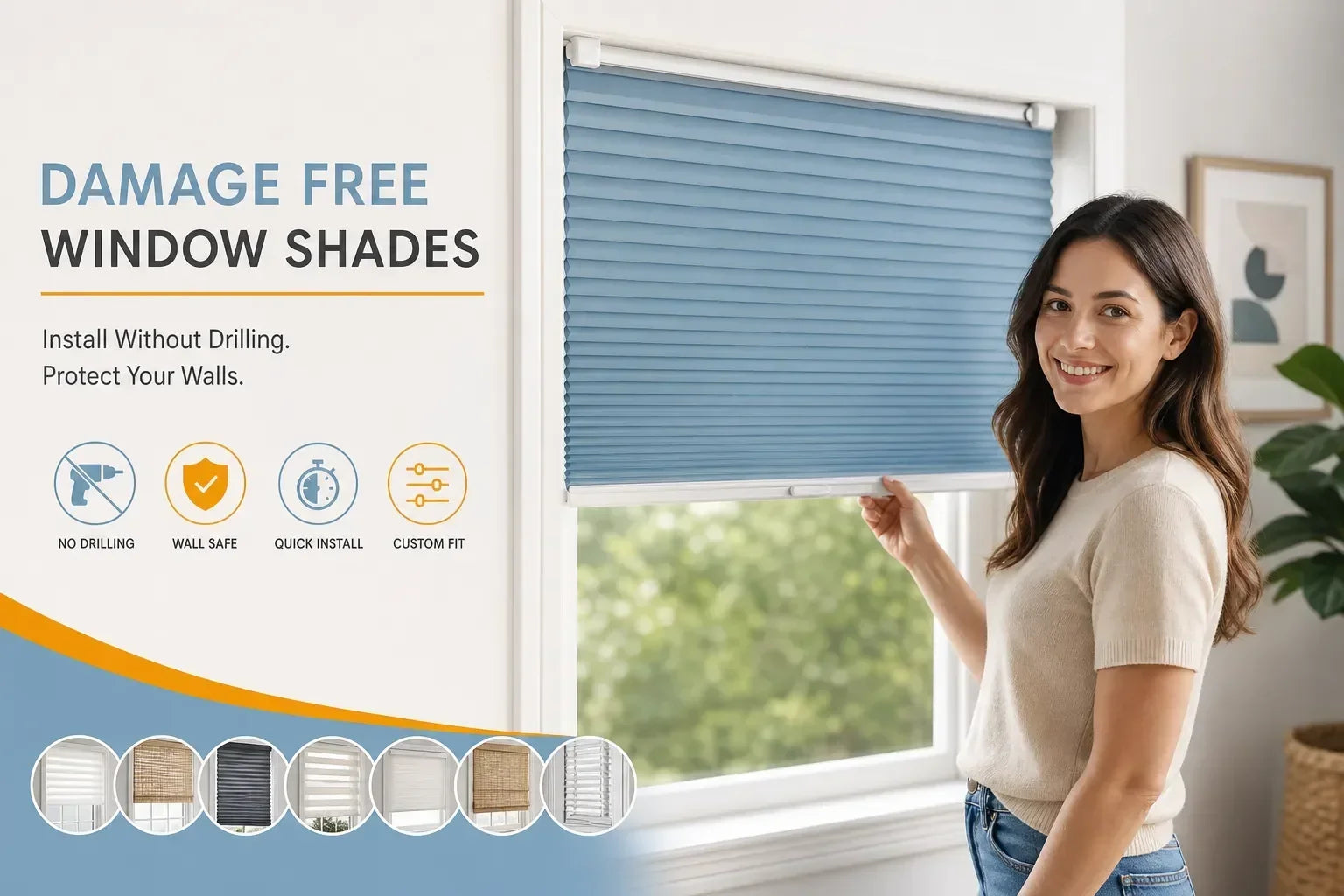
Brands like KEEGO® Blinds have taken that engineering principle further, pairing double-cell honeycomb shades with no-drill installation so renters and homeowners capture every performance benefit without touching a drill. By the end of this article, you'll have the R-value data, energy savings percentages, noise reduction numbers, and selection criteria you need to decide if cellular shades are the right move for your windows.
Why the honeycomb structure does all the heavy lifting
How air pockets trapped inside the cells work as insulation
Think of a thermos: its double-walled design traps a layer of still air between walls, which slows heat transfer dramatically. Cellular shades work on the same principle. Each hexagonal cell forms a sealed pocket of still air that sits between your window glass and your living space, acting as a thermal buffer that neither flat roller shades nor roman shades can replicate. That trapped, motionless air resists both heat loss in winter and heat gain in summer.
Single-cell vs. double-cell vs. triple-cell: what the extra air chambers do
A single-cell design gives you one row of pockets: the thinnest profile, the most affordable option, and baseline insulation suitable for mild climates or rooms where temperature control isn't a priority. Double-cell shades stack two rows of air chambers, which meaningfully improves thermal resistance and makes them the most popular choice for general home use across the US. If you're dealing with an older home, single-pane windows, or live somewhere with brutal winters or extended summer heat, triple-cell shades deliver the highest insulation performance of the three, though at a meaningfully higher price point. Think of each tier as a practical climate match rather than a luxury upgrade.
Benefits of cellular window coverings: insulation performance and energy savings
R-values across cell types and fabrics
R-values measure a material's resistance to heat flow. For insulated window shades, the numbers break down by configuration:
- Single-cell light-filtering: R-1.6 to R-2.2
- Single-cell blackout: R-2.2 to R-2.8
- Double-cell light-filtering: R-2.8 to R-3.5
- Double-cell blackout: R-3.8 to R-4.5
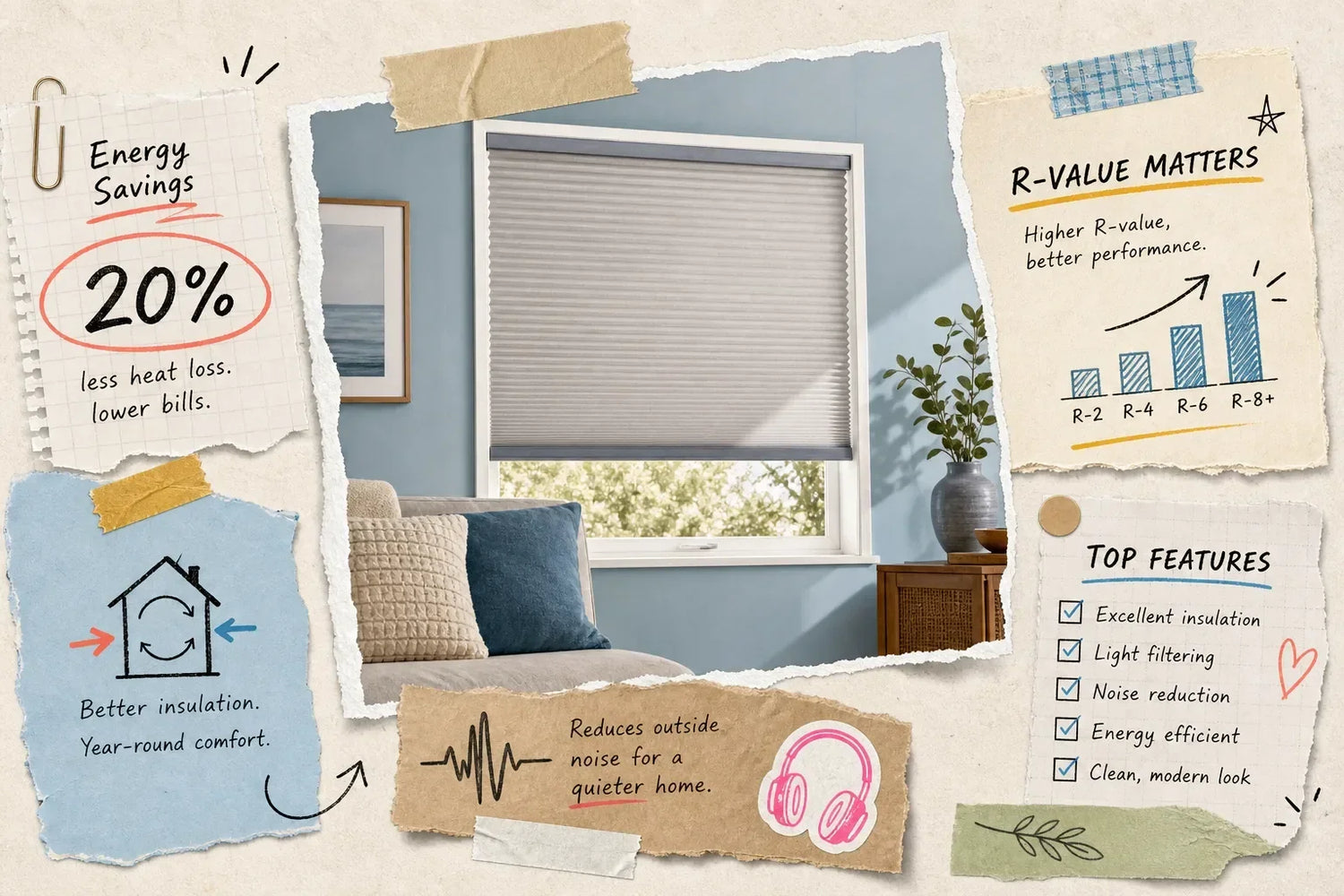
To put those figures in concrete terms, a double-cell blackout shade at around R-4.0 carries roughly 2.5 times the insulation resistance of a single-cell light-filtering shade at R-1.6. Double-cell designs improve R-value by approximately 25 to 40% over equivalent single-cell designs. From a U-value perspective, lower is always better. Single-cell averages around 0.48 versus double-cell's 0.30, a drop of up to 40%.
Heat loss reduction and seasonal energy cost savings
Those R-values translate into real dollar savings on utility bills. Cellular shades reduce winter heat loss through single-pane windows by approximately 40 to 60% compared with uncovered glass. The U.S. Department of Energy reports savings of up to 20% on heating energy and up to 15% on total heating-and-cooling costs compared with no window treatments at all. For summer, cellular shades can cut heat gain through windows by up to 60% during peak cooling months. DOE-funded residential testing has shown annual HVAC savings in the 10 to 34% range for properly fitted cellular shades, with results varying by climate zone, window age, and how consistently the shades are used.

Noise reduction: how much quieter cellular shades actually make a room
The real decibel numbers and what they mean in daily life
In a standard window setup, cellular shades typically reduce incoming sound by 5 to 12 dB, with well-fitted double-cell or triple-cell configurations reaching 15 to 20 dB under optimal conditions. A 10 dB reduction cuts perceived loudness roughly in half, so even a modest gain makes a real difference when you're working from home or trying to sleep through early morning traffic. These shades are most effective at softening continuous background sound: traffic, distant voices, and general neighborhood activity. They're not a substitute for acoustic treatment in loud environments like industrial zones or near active flight paths.
When cellular shades work best for sound control
A tight inside-mount fit with minimal gaps between the shade and the window frame is the single biggest factor in noise performance. Pairing cellular blinds with heavier drapes compounds the effect, since layering treatments addresses the full window surface area rather than just the shade panel, so set honest expectations: these shades reduce ambient noise fatigue effectively over the course of a day, but they won't fully mute a fire truck or a late-night gathering next door.
Light control without sacrificing comfort
Light-filtering fabrics: natural light without the glare
Light-filtering cellular shades diffuse incoming sunlight rather than blocking it outright. The result is a room that stays bright and welcoming while eliminating the hard-edged glare that causes eye strain at a computer screen or fades upholstered furniture and hardwood floors over time. Living rooms, home offices, and kitchens are natural fits for this fabric choice, where full darkness would feel oppressive but direct afternoon sun is a daily nuisance. Diffused light also reduces the cooling load on your AC system by preventing localized solar heat buildup near windows.
Blackout cellular shades: when you need complete darkness
Blackout cellular fabrics block virtually all incoming light, making them the top choice for bedrooms, nurseries, and home theaters. Beyond the obvious sleep benefit, blackout cellular shades also carry higher R-values than light-filtering options in the same cell size, so you gain stronger insulation performance alongside the room-darkening function. KEEGO® Blinds' blackout cellular honeycomb shades combine these two performance properties with a no-drill mounting system, which means renters can achieve full room-darkening coverage and real energy efficiency without risking their security deposit.

Child safety and operating system options that matter
Why cordless cellular shades are the standard for homes with children and pets
Corded window coverings are a recognized strangulation hazard for young children and pets, and accessible loops or dangling cords create real risk in any room a child or animal can reach. Cordless cellular shades eliminate that hazard entirely by removing the accessible cord from the operating system, and they're available across all price tiers in both light-filtering and blackout fabrics. One important note: some top-down bottom-up designs reintroduce accessible cords depending on the specific mechanism, so verify cord placement carefully before purchasing if child safety is your primary concern.
Motorized and top-down bottom-up options
Motorized cellular shades remove manual cords completely, adding a layer of safety along with genuine convenience for high windows or frequently adjusted rooms. Top-down bottom-up operation is a smart configuration for street-facing rooms: lower the shade from the top to let diffused light in through the upper portion while maintaining privacy at eye level. Premium motorized cellular options also integrate with smart home systems, allowing app, remote, or voice control through platforms like Alexa or Google Home.

What cellular shades cost and how to pick the right one
Pricing tiers for standard windows in the United States
Budget single-cell light-filtering shades start around $100 to $250 per window installed. Mid-range double-cell configurations, covering both light-filtering and blackout fabrics with cordless operation, typically run $150 to $350 per window. Custom double-cell designs with precise inside-mount fitting often land in the $280 to $380 range, reflecting the added cost of made-to-order sizing. Premium options, including motorized, triple-cell, or specialty configurations, range from $300 to $800 or more per window, with sliding doors scaling to $900 to $1,800 at that tier. The upfront cost is real, but DOE-backed energy savings of up to 20% on heating costs create a measurable payback trajectory over several heating seasons, particularly for homes with older windows or in colder climates.
Key features to prioritize when choosing energy-efficient window treatments
For most American homes, the right cellular shade combines double-cell insulation, inside-mount precision fit, cordless operation, and blackout fabric for sleeping spaces. KEEGO® Blinds' cellular honeycomb shades deliver all of that alongside a no-drill mounting system that requires no tools, no wall damage, and no contractor, making it a strong match for renters who want genuine energy efficiency and light control without putting their lease at risk. Custom sizing with a built-in measurement finder and real-time price quoting removes the guesswork that usually makes custom window treatments feel intimidating to order for the first time.
The bottom line on cellular window coverings
The benefits of cellular window coverings are specific, measurable, and available at price points that fit most household budgets. Double-cell blackout shades deliver roughly 2.5 times the insulation of a basic single-cell light-filtering option, reduce winter heat loss by up to 60%, and can cut annual heating energy use by up to 20% according to the U.S. Department of Energy. Noise reduction of 5 to 12 dB, cordless child safety, and room-matched light control round out a performance profile that no other single window treatment type matches across all four categories at once.
The selection framework is straightforward: choose double-cell for most US climates, blackout fabric for bedrooms and nurseries, cordless operation for any home with children or pets, and a no-drill mounting option for rentals or damage-conscious installations. The right shades pay for themselves through reduced utility bills while improving comfort in every room they cover. Custom sizing, transparent pricing, and tool-free installation make the upgrade far more approachable than it sounds, and if you're ready to see what those specifications look like in a real product, KEEGO®'s cellular honeycomb shades are a practical place to start.

Leave a comment
All comments are moderated before being published.
This site is protected by hCaptcha and the hCaptcha Privacy Policy and Terms of Service apply.