
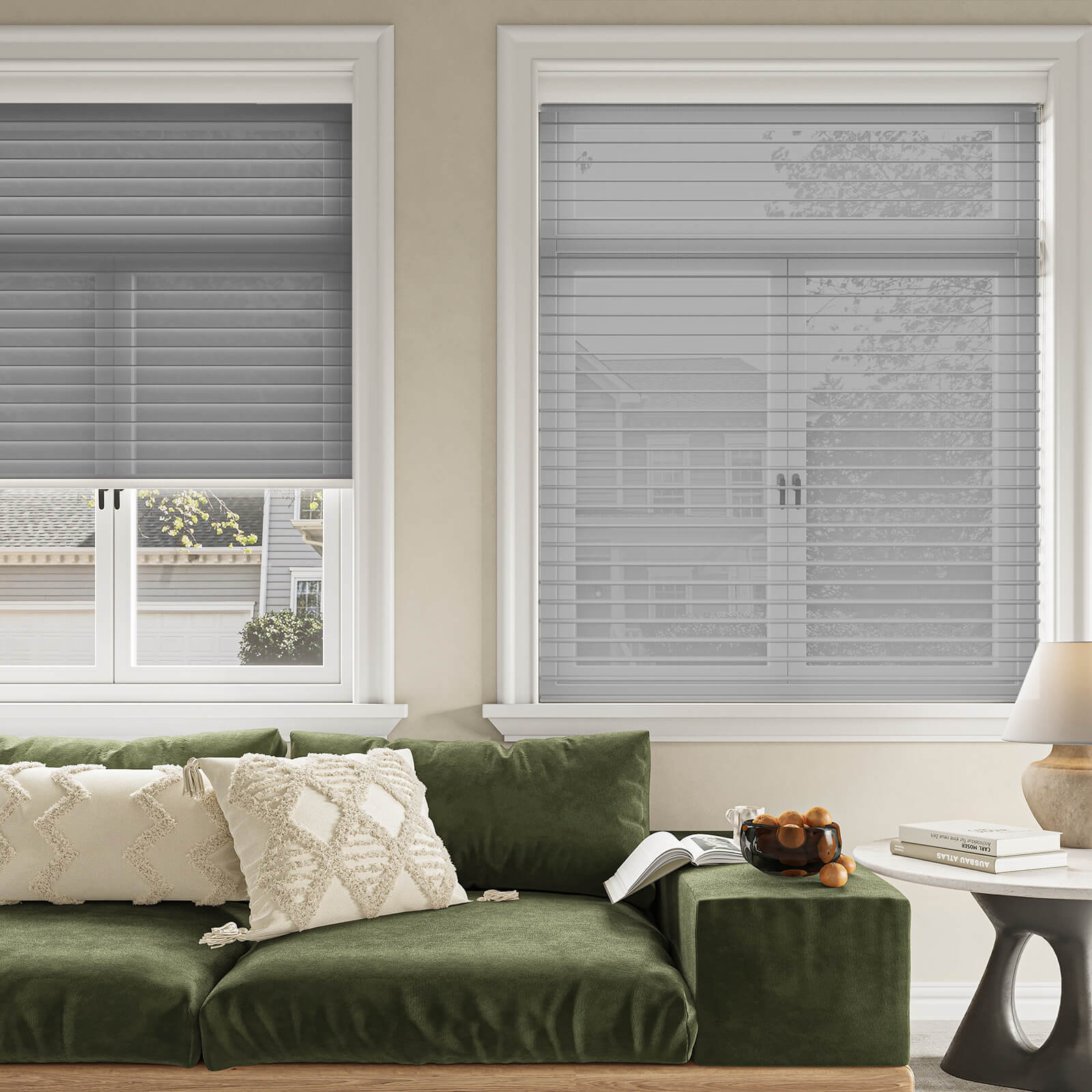
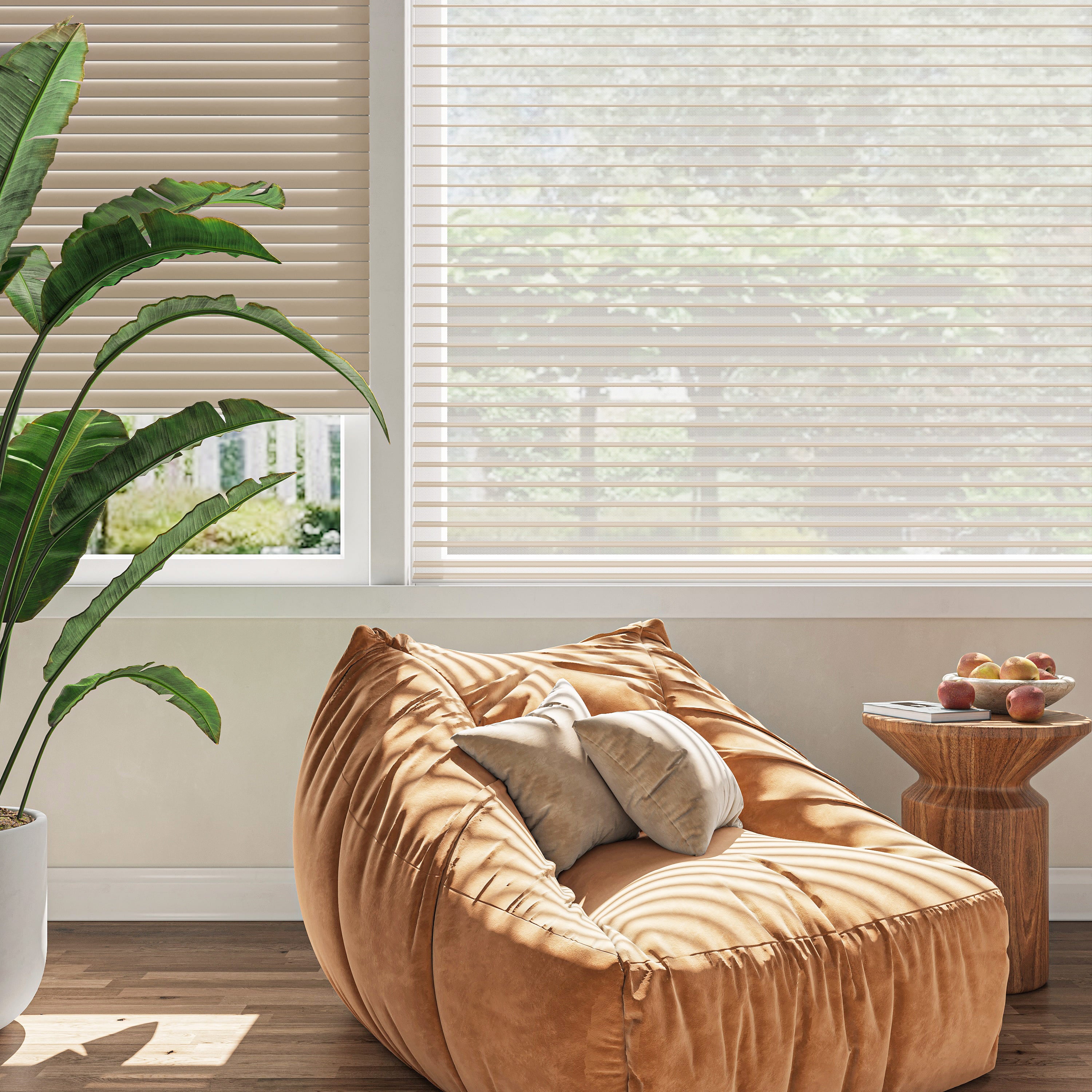
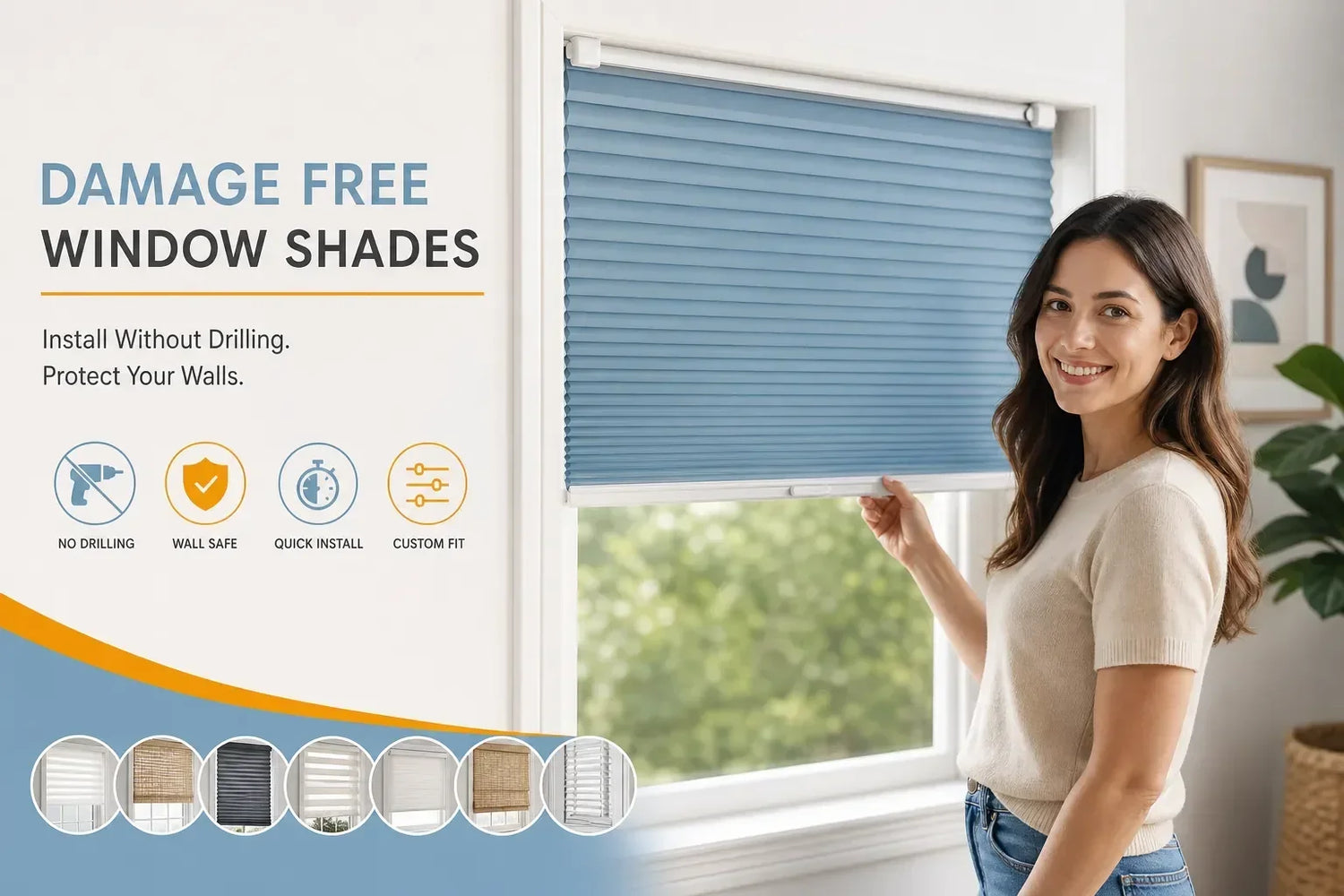
Your lease says no holes. Your window is bare. Every shade at the hardware store assumes you own a drill and don't mind patching drywall on move-out day. That used to be the entire situation for renters and damage-conscious homeowners searching for damage-free window shades that actually look intentional.
The market has caught up. Engineered no-drill mounting systems now hold custom shades firmly without a single screw touching your wall or frame, and KEEGO® Blinds has built its entire product line around this approach. The options go well beyond a tension rod with a curtain panel. In 2026, you can get cellular blackout shades, roller shades, and tailored Roman shades installed in minutes without tools and removed cleanly on move-out day without a trace.
This guide covers seven renter-friendly, no-hole window shades worth your money, the mounting systems that make zero-mark installation possible, and exactly how to pick the right one for your window size, light control needs, and budget.
The Mounting Systems Behind Every Damage-Free Window Shade Install

Before you compare shade types, understand what's actually holding them to your window without screws. There are four core methods:
- Tension and pressure fit, friction-grip systems that brace against the frame
- Adhesive clips, peel-and-stick hardware that bonds to the frame surface
- Inside-mount compression headrail, the headrail itself locks into the jamb with no brackets
- Command-style strip mounts, stretch-tab adhesive designed for clean removal
Each carries a different damage profile, and knowing the difference saves you from a nasty surprise on move-out day.
Mechanical methods, tension rod systems and inside-mount compression headrails, carry zero adhesive risk. They grip by friction and outward pressure against the window frame. The main hazard is overtightening, which can scuff or bow the frame if the ends aren't rubberized. On smooth wood or vinyl frames, risk is generally low to moderate depending on how much pressure is applied, so stop tightening before the headrail shows any flex.
Adhesive systems, including peel-and-stick clips and command-style strips, depend entirely on surface condition. Command-style strips carry the lowest damage risk among adhesive options because removal involves stretching the tab downward rather than pulling straight out. The caveat: textured paint, rough surfaces, and wallpaper are where adhesive mounts fail or take finish with them on removal. Always test a strip in an inconspicuous corner before committing to a full install.
If you prefer blinds over shades, look for no-drill blinds that use the same compression or adhesive-clip systems described above, the mounting principles transfer directly.
Best Damage-Free Window Shades: Structure-First Picks (Shades 1, 4)

These four shade types are among the most commonly available no-drill options on the market. Each uses a damage-free mounting method and delivers results that look intentional rather than improvised.
1. No-Drill Cellular Honeycomb Shades
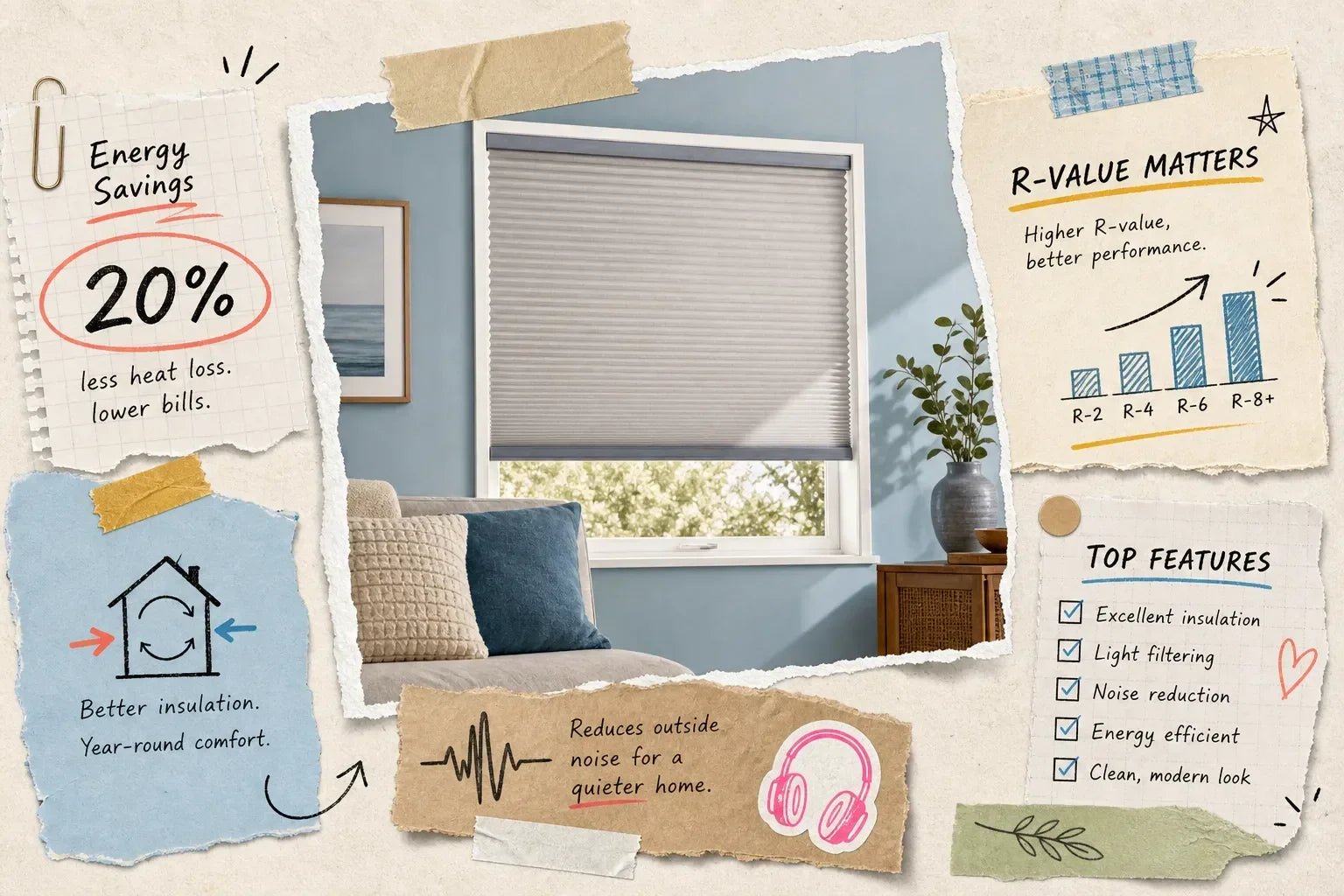
Cellular shades use an inside-mount compression or lever-lock headrail: no holes, no adhesive, no brackets on the wall. The headrail is sized to your window opening and held by outward pressure against the jamb. Double-cell construction traps air in two honeycomb layers, giving you the strongest thermal insulation of any shade type on this list. Double-cell blackout models carry R-values around R-4.0 compared to R-2.5 for single-cell, a gap that's meaningful if you're paying your own heating and cooling bills. (R-value figures are drawn from 2026 product specifications published by leading cellular shade manufacturers and retailers including Blinds.com.)
Blackout cellular options block 99% or more of light through the fabric itself, based on fabric-level testing reported by retailers including Blindsgalore and Wirecutter. Edge light depends on how tightly the shade fits the frame, a gap of more than about 1/8 inch per side will noticeably undercut that number, which is exactly why custom sizing matters. Price range runs from approximately $43 to $82 depending on cell count and sizing, based on 2026 listings across major no-drill retailers.
2. Tension-Mounted Roller Shades

Roller shades are the simplest entry point for no-hole window coverings. The shade rolls on a tube held by a spring tension mechanism inside the frame: nothing touches the wall, and removal takes seconds. Fabric options run from light-filtering sheers to full blackout with thermal foam backing, with blackout rollers testing at 95 to 100% light blocking depending on inside-mount fit. Budget-friendly no-drill roller options land in the $35 to $55 range based on 2026 retailer pricing, making these a strong first purchase for renters who want function without a large upfront investment.
One limitation worth knowing: tension systems are not ideal for very wide windows where the rod's holding strength may not distribute evenly. For standard-size windows, they're reliable and genuinely damage-free.
3. Adhesive-Bracket Roman Shades
Roman shades fold in horizontal pleats when raised, giving a tailored look that reads as far more expensive than it costs. The mounting system uses adhesive pads to attach brackets to the frame or wall; the headrail snaps in after. The install is straightforward, but removal is where renters make mistakes. Warm the adhesive with a hair dryer, work dental floss behind the bracket in a slow sawing motion, then clean any residue before the adhesive cools. Never pull cold, that's what lifts paint.
For renters who want a decorative upgrade without the cheap-blinds look, Roman shades are a strong option. They layer easily with curtain panels and come off cleanly when you follow the removal steps correctly.
4. Zebra Shades with No-Drill Brackets
Zebra shades use dual-layer alternating sheer and solid bands that slide past each other to control how much light enters at any position. They're compatible with the same adhesive-bracket or inside-mount systems as roller shades, so the installation process is nearly identical. Zebra shades work especially well in living rooms and dining rooms where full blackout isn't the goal but you still want control over glare and privacy throughout the day. One tradeoff compared to cellular shades: zebra shades don't trap air between layers, so they offer no meaningful insulation benefit. Pricing runs similarly to roller shades, and custom widths are available from specialty retailers.
Damage-Free Window Shades: Specialty and Budget Options (Shades 5, 7)
5. Tension-Rod Shade Panels
A spring tension rod sits inside the frame or spans a doorway, and the shade fabric hangs from it. Nothing touches a wall, making this the most portable and genuinely damage-free option on the list. These panels are easy to move, reuse, and swap between windows without adjustment. The tradeoff is weight capacity: heavy blackout material is too much for most tension rods, so this option suits lighter fabrics on narrow windows, small bathroom windows, or interior French doors.
6. Stick-On Adhesive Shade Panels
Flat fabric panels with adhesive strips along the top edge mount directly to the frame or wall surface. These are the most budget-friendly option on this list, often under $35, but also the hardest to get looking tailored on wider windows. Use them where the priority is basic privacy rather than a polished finish: bathroom windows, laundry rooms, or rental closets. For anything visible in a main living area, one of the structure-first options above will serve you better.
7. Top-Down Bottom-Up Cordless Shades
Top-down bottom-up shades operate from both ends of the window. Lower the top half to admit natural light along the bottom while maintaining privacy at eye level, or raise the bottom for sill-level coverage while keeping the upper portion open. These are available in cellular and Roman formats, both compatible with no-drill mounting systems. Cordless operation eliminates the strangulation hazard of hanging cords, making this the safest configuration for homes with young children. They're also the most flexible option for bedrooms and home offices where light control needs shift throughout the day.
Blackout Performance and Insulation: Which Shade Delivers on Both

Not every shade that claims "blackout" actually delivers in practice. The fabric percentage is only half the story; the mount quality determines how much edge light gets through. Double-cell honeycomb blackout shades consistently test at 99% or better through the fabric and carry the highest R-values among all shade types, with measured results around R-4.0 for shade-only configurations. Blackout roller shades with foam or thermal backing perform at 95 to 100% depending on fit and fabric density, but they don't match the measured insulation performance of honeycomb construction.
For renters concerned about heating and cooling costs, research on cellular shade insulation suggests a no-drill double-cell blackout cellular shade offers the best combination of light blocking and thermal performance among the options on this list. You get maximum light blocking, genuine thermal insulation, and a mounting system that leaves no marks when you move. Edge light is the weak point for every shade type: the tighter your inside-mount fit, the less of it you'll see.
How to Install and Remove Without Leaving a Trace
For tension and pressure-fit systems, dry-fit the shade before locking anything in place. Confirm clearance and depth first, insert one side of the headrail, then engage the locking mechanism to seat the other side. Tighten until the shade is secure but stop before the headrail bows, overtightening is the most common cause of frame marks. Check that it's level before fully releasing, because a tilted shade wears unevenly and may rub the frame over time.
For adhesive mounts, surface prep is everything. Clean with isopropyl alcohol, let it fully dry, then press brackets for at least 30 seconds. Wait the full cure time before hanging anything. On removal, warm the adhesive with a hair dryer, work dental floss behind the bracket in a sawing motion, and use an adhesive remover if any residue remains. That sequence protects paint on both install and removal.
KEEGO® Blinds' no-drill system is designed to simplify this further. Rather than separate brackets, the headrail itself is engineered to compress into the frame and lock in place, distributing pressure across the full width rather than concentrating it at two points. According to KEEGO's product specifications, this design is intended to work across wood, vinyl, and aluminum frames with minimal mark risk on removal, performance that depends on proper measurement and installation. Because the shade is made to your exact window dimensions, the inside-mount pressure distributes correctly from the start without any trimming required.
Sizing, Price, and Where to Order the Right Fit
Off-the-shelf no-drill shades at big-box retailers, for example, Home Depot, run from about $35 to $55, but standard sizing means gaps at the edges that let in light and undercut insulation. Custom-sized shades from specialty retailers run from approximately $45 to $90 depending on shade type and cell count. The tighter fit justifies the price difference in both performance and appearance, especially for blackout and cellular shades where edge fit is the variable that makes or breaks the result.
SelectBlinds, Blinds.com, and Blindsgalore all offer made-to-measure options for cordless, no-hole window shades. LEVOLOR Trim + Go at Lowe's handles in-store trimming if you need a same-day solution. Be careful about trimming no-drill shades yourself: cutting the headrail can compromise the pressure-fit mechanism and reduce its holding strength.
KEEGO® Blinds is a strong choice for anyone who wants custom sizing and a built-in no-drill mounting system in a single order. Their guided measurement tool and real-time price quote remove the two biggest barriers to custom ordering: not knowing how to measure and not knowing what it will cost upfront. Available styles include cellular, roller, zebra, Roman, and top-down bottom-up, all built around the same no-drill approach. The shade is engineered for your exact window from the start, not trimmed down from a standard size.
Ready to Make Your Move?
Damage-free window coverings have moved well past the functional-but-ugly category. The seven types in this guide cover every use case: maximum insulation, full blackout, decorative style, tight budgets, and standard windows in need of a no-commitment solution. The mounting system matters as much as the shade itself, so match the method to your surface and follow the installation and removal steps to protect your walls and your deposit.
For renters or anyone avoiding a drill, ordering custom damage-free window shades built around a no-drill system from the start is the smartest move, not a standard size trimmed to fit after the fact. Use the shade types and price benchmarks in this guide to narrow your options, measure your window once, and order with confidence.
Quick Comparison: Damage-Free Window Shades at a Glance
| Shade Type | Price Range (2026) | Blackout % | Insulation (R-Value) | Damage Risk |
|---|---|---|---|---|
| Cellular Honeycomb (Double-Cell) | $43, $82 | 99%+ | ~R-4.0 | Very Low |
| Tension Roller Shades | $35, $55 | 95, 100% | Minimal | Very Low |
| Adhesive Roman Shades | $45, $90 | Varies | Low | Low, Moderate |
| Zebra Shades | $35, $55 | Partial | None | Low |
| Tension-Rod Shade Panels | Under $35 | Light filtering | None | None |
| Stick-On Adhesive Panels | Under $35 | Basic | None | Low, Moderate |
| Top-Down Bottom-Up Cordless | $45, $90 | Varies by format | Varies by format | Very Low |
Frequently Asked Questions
Do damage-free window shades actually hold up long-term?
Compression and lever-lock headrail systems are built to hold under normal daily use for years. Tension rods and adhesive systems require periodic checks; retighten or re-press if you notice any slip. Custom-sized shades fit more securely than trimmed standard sizes, which reduces gradual movement over time.
Will any of these void my lease?
Mechanical systems that use no adhesive and leave no marks are the safest choice. Adhesive options carry some risk on certain wall and frame surfaces, so test a strip first and keep your lease's damage clause in mind. When in doubt, opt for a compression headrail system.
Can I use damage-free shades on every window type?
Most no-drill systems are designed for standard rectangular window frames with a flat jamb. Arched windows, very narrow sills (under 1.5 inches), or unusually shallow frames may not seat a compression headrail properly. Check the minimum depth and width requirements before ordering.
How do I measure for a no-drill shade?
For an inside mount, measure the width of the window opening at three points (top, middle, bottom) and use the smallest measurement. Measure height the same way. Deduct the amount specified by the manufacturer, typically 1/4 to 1/2 inch, so the headrail seats without forcing. Most custom retailers provide a step-by-step measurement guide at checkout.

Leave a comment
All comments are moderated before being published.
This site is protected by hCaptcha and the hCaptcha Privacy Policy and Terms of Service apply.