
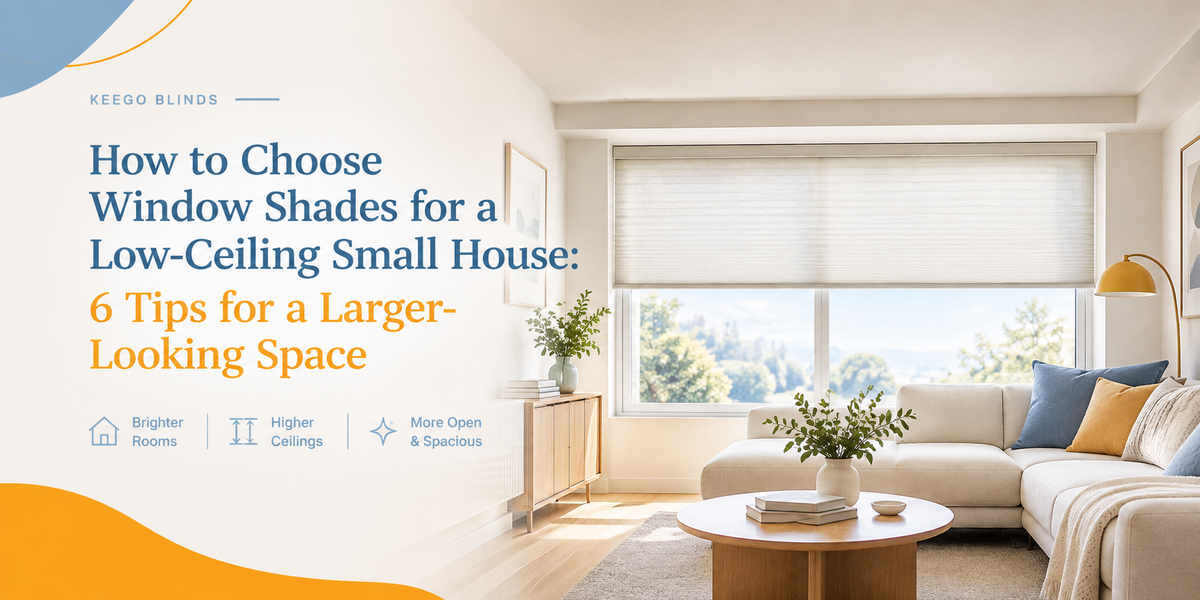
A low ceiling can make a room feel smaller, darker, and more enclosed. But the right window shades can help create a more open, balanced, and comfortable interior—without requiring a major renovation.
The secret is choosing window treatments that work with your ceiling height, window proportions, and natural light.
Here are six practical tips for choosing the best window shades for a low-ceiling house.

1. Mount Window Shades Higher to Draw the Eye Upward
One of the simplest ways to make a low-ceiling room feel taller is to position the window treatment higher on the wall, when the window and installation conditions allow it.
Mounting an outside-mount shade above the window frame can create a longer visual line between the window and ceiling. This encourages the eye to move upward and makes the window feel more integrated with the wall.
However, DO NOT mount shades higher simply to follow a design trend. Check:
-
Available wall space above the window
-
Mounting surface and hardware requirements
-
Window handles and operating clearance
-
Shade dimensions and installation instructions
- Check guidance carefully before starting to customize your window shades
Design tip:
Aim for a clean, intentional installation—not necessarily the highest possible mounting position.

2. Choose Slim, Minimal Window Shade Styles
For low ceilings, bulky window treatments can add unnecessary visual weight. Slim-profile shades with clean lines often create a more streamlined appearance.
Recommended options
- Roller shades: Simple, sleek, and suitable for modern or minimalist interiors.
-
Cellular shades: Structured yet lightweight-looking, with options for insulation and light control.
- Simple Roman shades: A good choice for adding softness and texture without overwhelming the window.
Avoid overly heavy valances, elaborate top treatments, or large decorative details that compete with the ceiling and window.
The best window shade style depends on your room's design, window size, and functional requirements—but simplicity is often a useful starting point for low-ceiling spaces.

3. Use Light Colors to Keep the Room Feeling Open
Color can influence how bright and spacious a room feels.
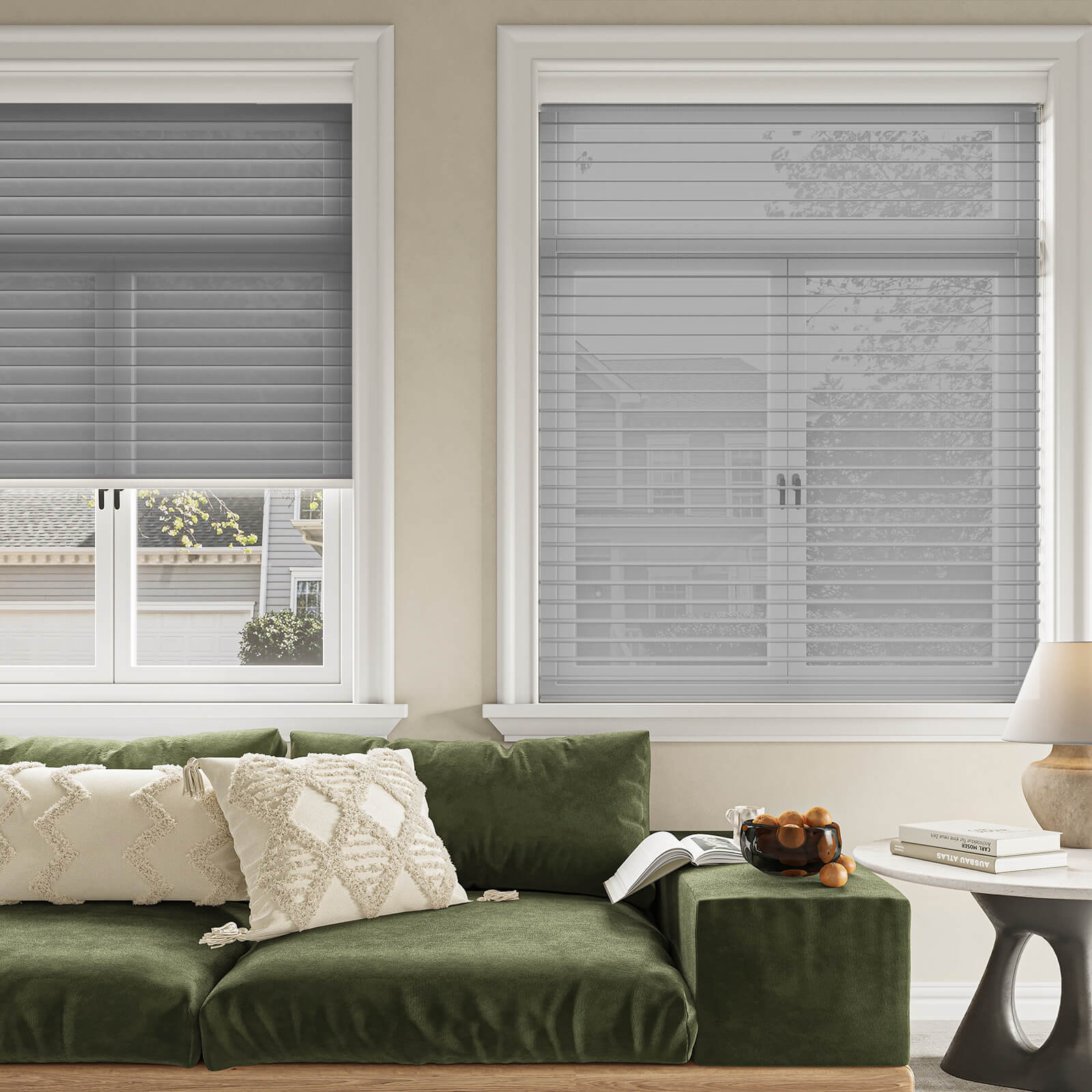
Light or neutral window shades can help maintain a brighter visual environment, especially when the room has limited natural light. Shades that closely coordinate with the wall or window trim can also create a more continuous appearance.
Consider:
-
Soft white for a clean, minimalist look
-
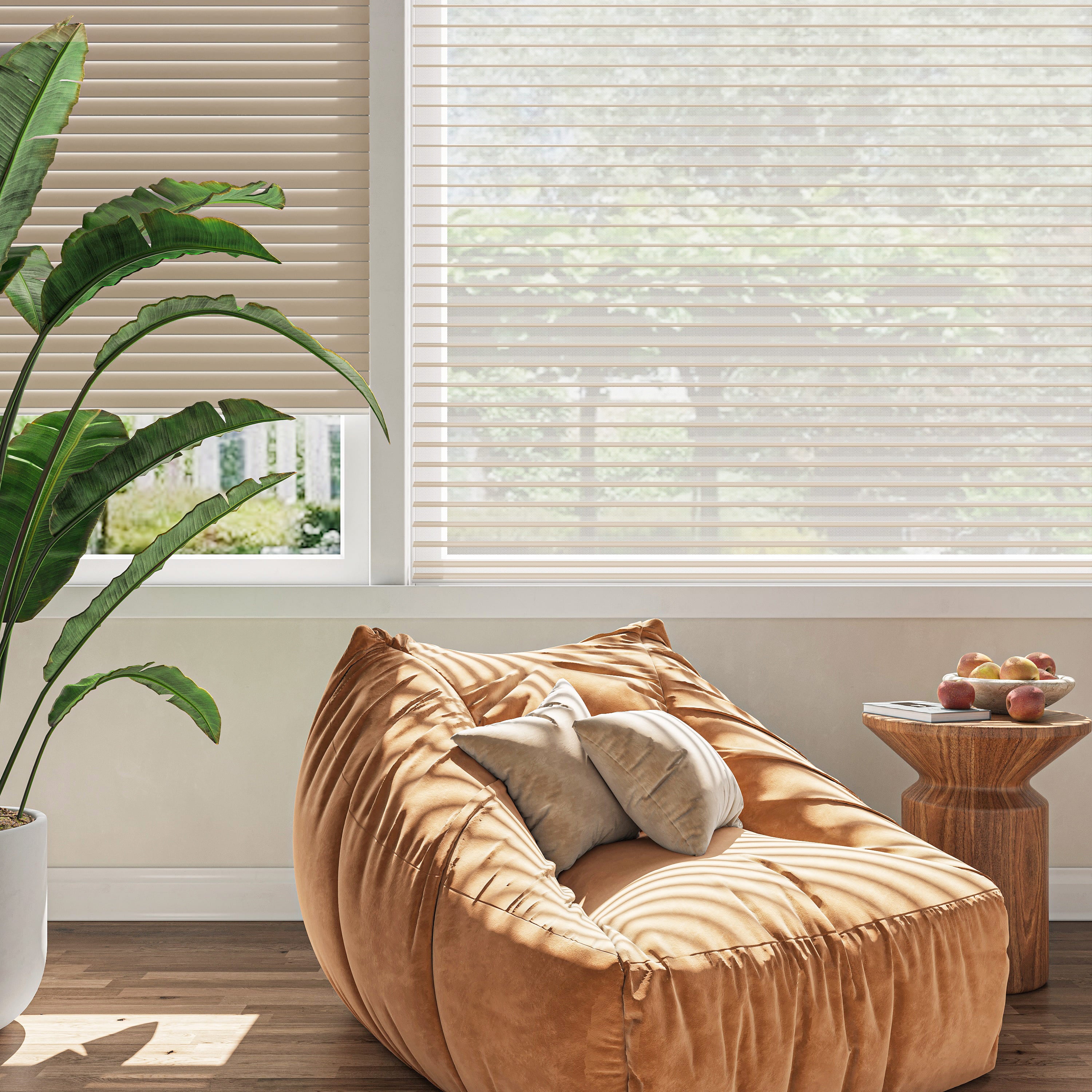
Warm beige for a cozy and natural atmosphere
-
Light gray for contemporary interiors
-
Linen-inspired neutrals for subtle texture
Dark window shades are not automatically unsuitable for low ceilings. They can create a sophisticated, intimate atmosphere when balanced with the rest of the room.
The goal is not to avoid color. It is to avoid creating unnecessary visual heaviness.

4. Prioritize Natural Light and the Right Level of Privacy
A low-ceiling room can feel even more enclosed when its window treatments block too much daylight.
Before choosing a shade, decide how much light and privacy the room actually needs.
|
Room |
Shade Consideration |
|
Light-filtering shades to preserve daylight |
|
|
Blackout or room-darkening shades for sleep |
|
|
Glare control without excessive darkness |
|
|
Privacy and moisture-appropriate materials |
|
|
Light control, privacy, and convenient operation |
Light-filtering shades can reduce glare while allowing some daylight to enter. Blackout shades are more suitable when you need stronger light control, although actual performance depends on the fabric, mounting method, and light gaps.
Choose the level of light control based on the room's purpose—not simply because blackout sounds better.

5. Match the Shade to Your Window's Size and Proportions
The best window treatment for a low ceiling depends on more than ceiling height. Window width, height, position, and surrounding wall space all affect the final look.
For small windows
Choose a shade with a simple profile and appropriate dimensions. Avoid treatments that make the window appear unnecessarily crowded or visually heavy.
For large windows
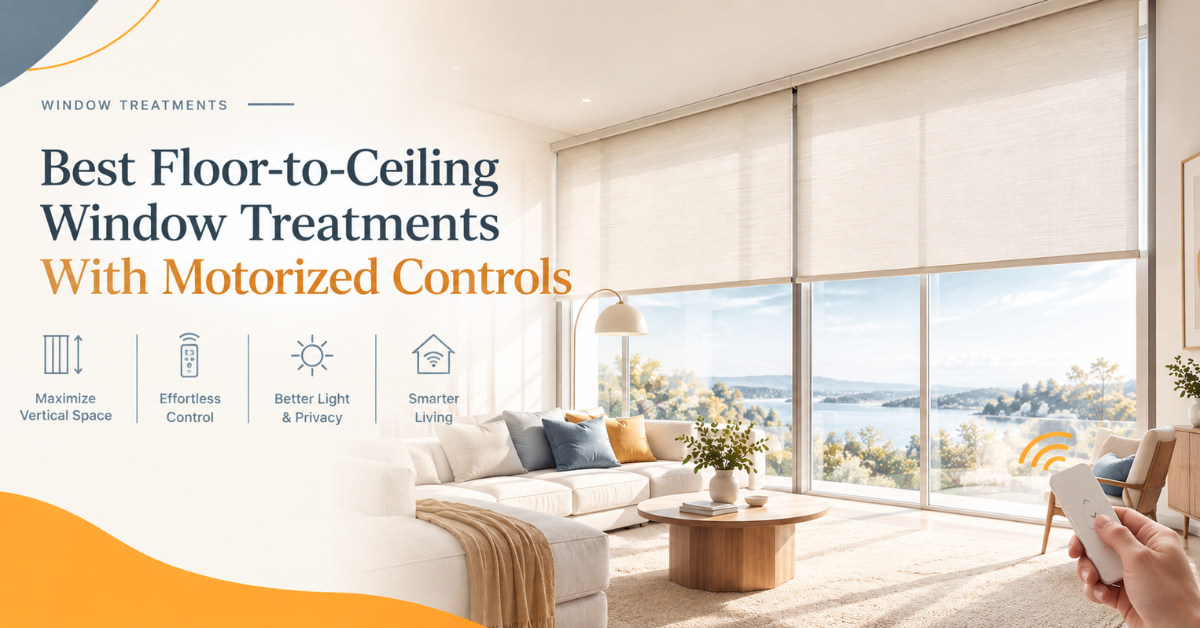
Consider the shade's width, weight, and operating method. Motorized or extra-wide options may be practical for windows that are difficult to reach or operate manually.
For multiple windows
Using a consistent shade style, color, and fabric family can create a more unified appearance across the wall.
Inside-mount and outside-mount shades can both work, but the right choice depends on the window recess, available wall space, hardware clearance, and desired light coverage.
6. Consider Motorized and No-Drill Window Shades
Functionality matters just as much as appearance—especially when your windows are wide, high, or difficult to reach.
Motorized window shades
Motorized shades can make it easier to adjust light and privacy without manually operating every window. They may be particularly useful for:
-
Large windows
-
Windows behind furniture
-
Multiple windows in one room
-
Bedrooms and living rooms
-
Hard-to-reach installations
Check the product's control system, power source, compatibility, and installation requirements before choosing.

No-drill window shades
No-drill shades can be a practical option for renters or homeowners who want to avoid drilling into walls or window frames. However, they are not suitable for every window or shade size.
Always confirm the mounting system, window compatibility, and product-specific weight requirements.
Explore KEEGO® Blinds' no-drill window shade solutions.
Final Thoughts
Choosing window shades for a low-ceiling house is about more than following a single design rule. Consider the mounting position, shade profile, color, natural light, window proportions, and operating requirements together.
For many homes, clean-lined roller shades, cellular shades, carefully proportioned Roman shades, and suitable motorized or no-drill options can create a balance of style and functionality.
Start with the room you actually have—and choose a window shade that makes it feel more comfortable, intentional, and complete.
Explore KEEGO® Blinds to find window shade options for different rooms and window types.

Frequently Asked Questions
What are the best window shades for low ceilings?
Slim roller shades and cellular shades are useful starting points because they offer a clean appearance without excessive visual weight. The best option depends on your window size, light-control needs, room style, and installation conditions.
Should window shades be mounted higher for low ceilings?
A higher mount can help draw the eye upward when the window and wall allow it. However, the shade must still be installed securely and operate properly.
Do light-colored window shades make a room look bigger?
Light-colored shades can help maintain a brighter, more continuous visual environment. The overall effect also depends on wall color, natural light, furniture, and window proportions.
Are motorized shades suitable for low-ceiling homes?
Yes. Motorized shades can be useful for large or difficult-to-reach windows and can make everyday light and privacy control more convenient.


Leave a comment
All comments are moderated before being published.
This site is protected by hCaptcha and the hCaptcha Privacy Policy and Terms of Service apply.