
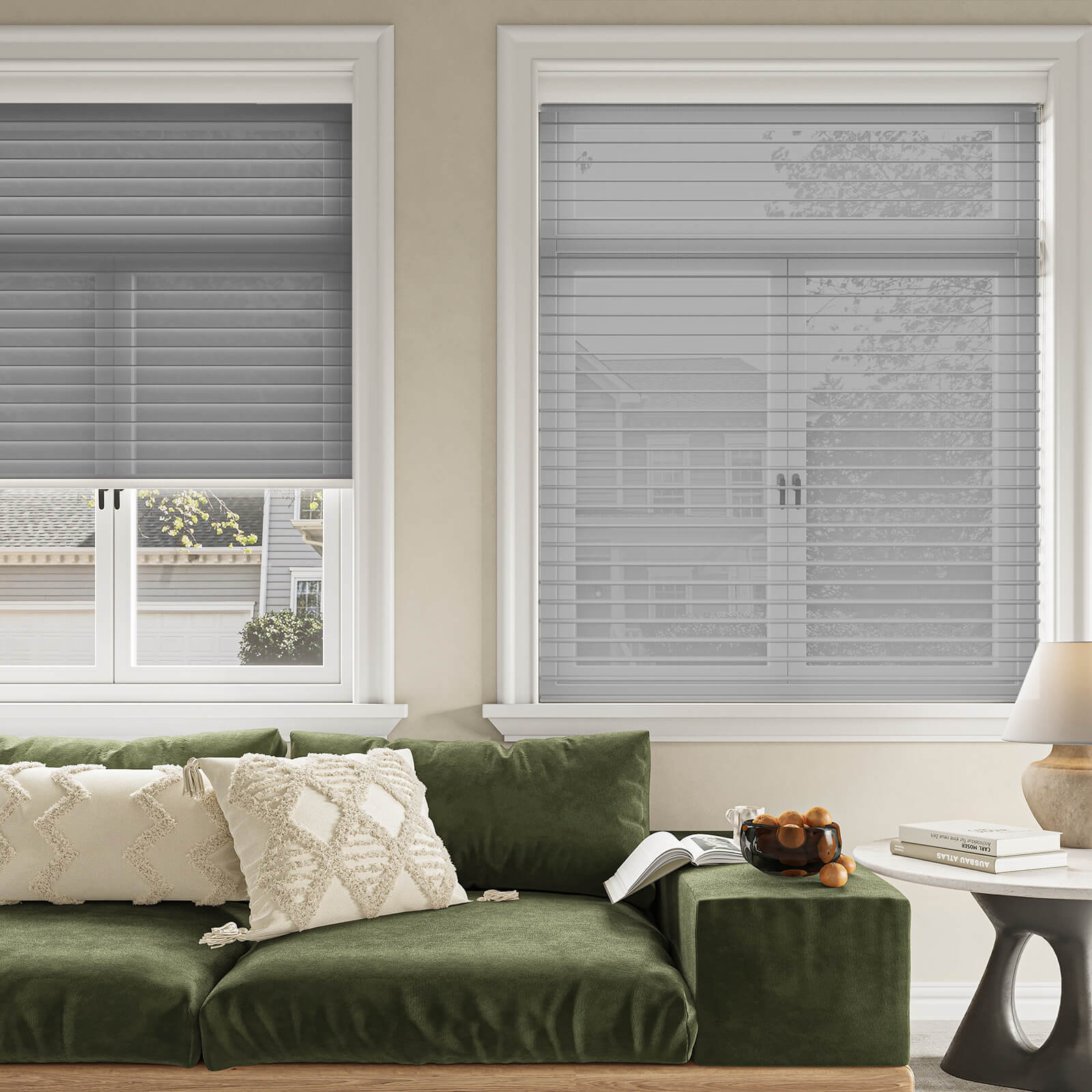
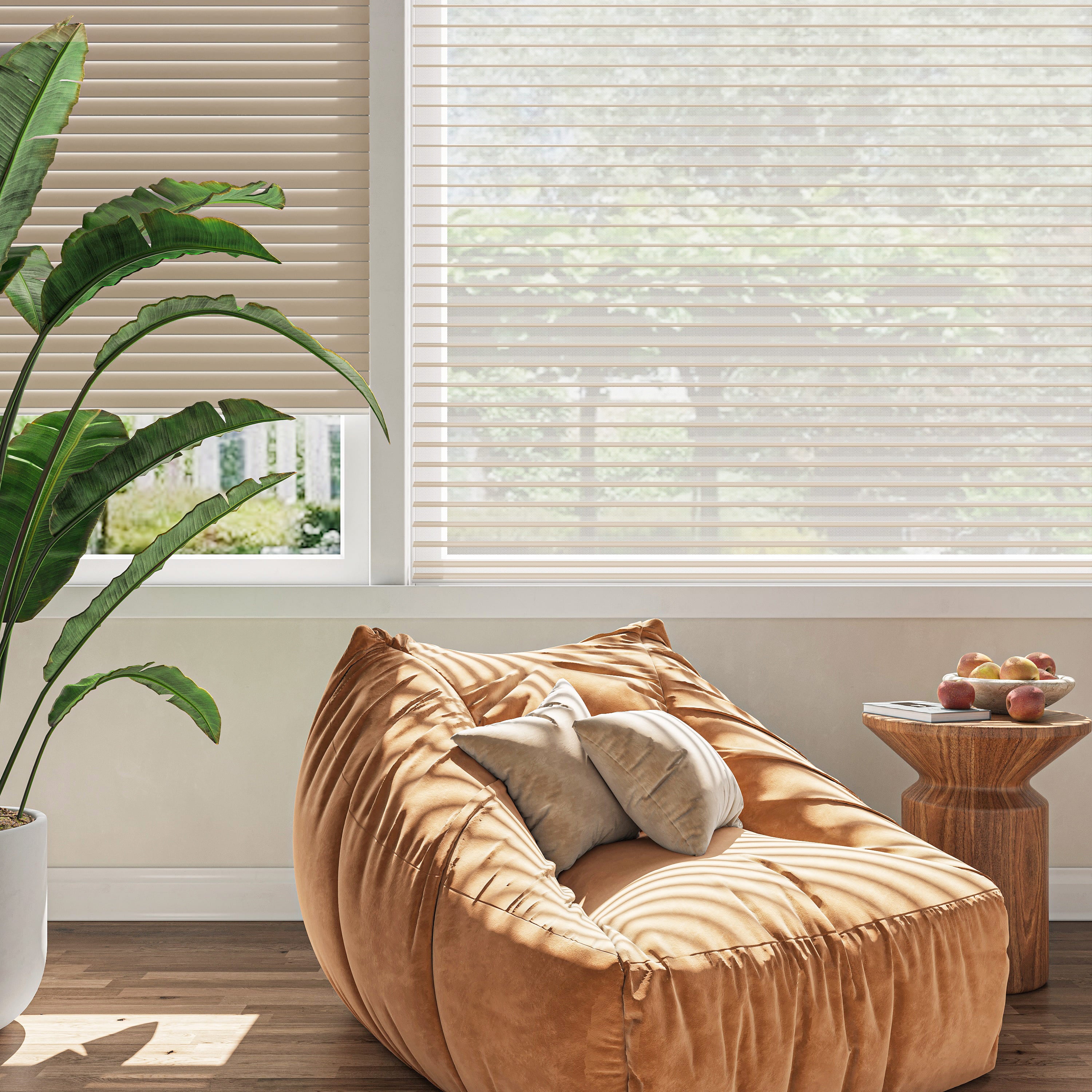
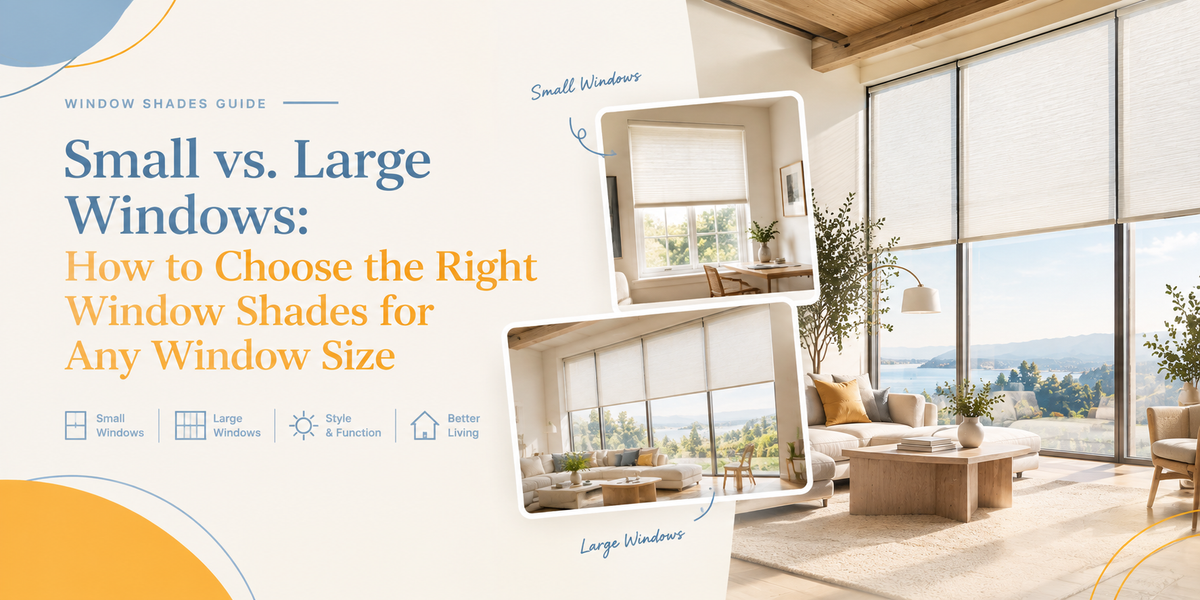
Not every window needs the same treatment.
A small bathroom window, a wide living room window, and a floor-to-ceiling glass wall all have different proportions—and using the wrong window shade can make the space feel visually unbalanced.
The best window shades should work with the size and proportions of the window, while still providing the right amount of light, privacy, and convenience.
So, what window shades work best for small windows? And what should you choose for large or oversized windows?
Here are five practical tips to help you choose the right window treatments for any window size.

1. Small Windows: Keep the Shade Simple and Proportional
Small windows can easily look overwhelmed by bulky window treatments.
Heavy curtains, oversized decorative details, or a shade that extends far beyond the window can add unnecessary visual weight. Instead, look for a streamlined treatment that fits the window's proportions.
Good options for small windows
Roller shades can create a clean, minimal appearance without taking up much visual space.
Cellular shades provide light control and privacy while maintaining a relatively streamlined profile.
Simple Roman shades can also work when you want to add softness and texture without overwhelming the window.
For a small window, consider:
-
A slim profile
-
Simple fabric or patterns
-
Light or neutral colors
-
Appropriate mounting depth
-
Light control based on the room's function
If the window is in a bathroom or bedroom, privacy may be more important than maximizing the amount of glass visible.
Design tip: The goal isn't to make a small window look huge. It's to make the window treatment feel intentional and appropriately scaled.

2. Large Windows: Think About Scale, Weight, and Operation
Large windows give you more natural light and expansive views, but they also create bigger window treatment challenges.
The shade needs to cover a larger area, withstand its own weight, and remain practical to operate.
For large or oversized windows, pay attention to:
-
Maximum shade width and height
-
Fabric weight
-
Motor capacity
-
Mounting requirements
-
Light gaps
-
Power source
-
Whether one shade or multiple shades are appropriate
A very wide window may be better served by multiple shades rather than one extremely large shade. This can make operation easier and allow different sections of the window to be adjusted independently.
For tall windows that are difficult to reach, motorized window shades can be especially useful.
Good options for large windows
Motorized roller shades provide a clean appearance and convenient operation.
Cellular shades can offer light control and insulation support for large glass areas.
Zebra shades provide adjustable light and privacy while maintaining a modern appearance.
Motorized curtains can work particularly well for very wide glass walls where softer fabric and full coverage are desired.
Always check the manufacturer's recommended dimensions and motor capacity before selecting a shade for an oversized window.

3. Match the Shade to the Window's Shape and Proportions
Window size isn't the only thing that matters. The relationship between width and height can change how a shade looks.
A tall, narrow window may benefit from a simple shade that emphasizes its vertical proportions.
A wide horizontal window may look better with a treatment designed to span the entire opening without adding unnecessary bulk.
For multiple windows next to each other, consistency can be more important than treating every window individually.
Using the same:
-
Shade style
-
Fabric
-
Color
-
Mounting approach
can create a more unified appearance across the wall.
For a large wall of windows, consider the entire composition rather than choosing a separate treatment based on each individual opening.
Before buying window shades, see KEEGO's guide to measuring your window first.
Think wall-to-wall, not window-by-window.
4. Let the Room Decide How Much Light and Privacy You Need
Window size doesn't automatically determine the right level of light control.
A small bedroom window may need blackout coverage, while a huge living room window may benefit from light-filtering fabric that preserves daylight.
Start with the room's purpose.
| Room | Small Windows | Large Windows |
|---|---|---|
| Bedroom | Blackout or room-darkening | Blackout or room-darkening |
| Living room | Light-filtering | Light-filtering or solar |
| Home office | Glare control | Solar or light-filtering |
| Bathroom | Privacy-focused | Privacy + light control |
| Nursery | Blackout or room-darkening | Blackout or room-darkening |
For large windows facing direct sunlight, solar shades can help reduce glare while maintaining some outdoor visibility, depending on the fabric.
For bedrooms and media rooms, stronger light control may be more appropriate.
Choose light control based on how you use the room—not simply how large the window is.

5. Consider Motorization for Large or Hard-to-Reach Windows
Motorization isn't only about smart-home technology. For certain windows, it's simply about convenience.
A small window that you can easily reach may not need motorized operation.
A large window behind a sofa? A tall window several feet above the floor? A wall of windows that needs to be adjusted every morning?
That's where motorized shades can make everyday life much easier.
Depending on the product, motorized window shades may offer:
-
Remote control
-
App control
-
Scheduled operation
-
Multiple-shade control
-
Voice control through compatible smart-home systems
For large homes with many windows, motorization can also make it easier to manage different shades without manually operating each one.
Before purchasing, check the exact motor's control methods, power source, smart-home compatibility, and recommended shade dimensions.
Small vs. Large Windows: Quick Comparison
| Small Windows | Large Windows | |
|---|---|---|
| Main priority | Proportion | Scale + operation |
| Recommended styles | Roller, Cellular, Simple Roman | Motorized Roller, Cellular, Zebra, Curtains |
| Light control | Room-specific | Room + exposure |
| Installation | Simple and compact | Check size and mounting requirements |
| Motorization | Optional | Often useful for hard-to-reach windows |
| Design approach | Keep it streamlined | Match the architecture |
Common Window Shade Mistakes to Avoid
Making a small window look heavier: Oversized treatments can overwhelm a small opening.
Treating a large window like a small one: Large windows require more attention to weight, dimensions, and operation.
Choosing based only on appearance: The right-looking shade may not provide enough privacy or light control.
Ignoring window proportions: Width, height, surrounding wall space, and ceiling height all affect the final look.
Forgetting how you'll operate the shade: A manual shade may become inconvenient when installed on a tall or oversized window.
Frequently Asked Questions
What are the best window shades for small windows?
Roller shades and cellular shades are good starting points because they offer a clean appearance without adding excessive visual weight. Simple Roman shades can also work when a softer decorative style is desired.
What are the best window shades for large windows?
Motorized roller shades, cellular shades, zebra shades, solar shades, and motorized curtains can all work for large windows. The best option depends on the window's dimensions, light exposure, privacy requirements, and interior style.
Should small windows have inside-mount or outside-mount shades?
Either can work depending on the window recess, mounting space, desired light coverage, and product requirements. Inside mounting can create a streamlined appearance, while outside mounting may provide more coverage when the window frame allows it.
Are motorized shades better for large windows?
Motorized shades can be particularly convenient for large or hard-to-reach windows. However, suitability depends on the shade's dimensions, motor capacity, power source, and control system.
Can you use the same shade style for small and large windows?
Yes. Using the same shade family across different window sizes can create a consistent interior design. However, the exact configuration, fabric, mounting method, or number of shades may need to change based on each window's dimensions.
Final Thoughts
Choosing window shades isn't simply about finding a style you like. The size and proportions of your windows should be part of the decision from the beginning.
For small windows, streamlined roller, cellular, or simple Roman shades can provide the right balance without overwhelming the opening.
For large windows, prioritize scale, light control, privacy, and ease of operation. Motorized roller, cellular, zebra, solar shades, and motorized curtains can all be worth considering depending on the space.
And remember: the best window shade isn't necessarily the most dramatic one. It's the one that makes your window—and the room around it—feel right.
Explore KEEGO® Blinds for window shade options designed for different window sizes, rooms, and installation needs.
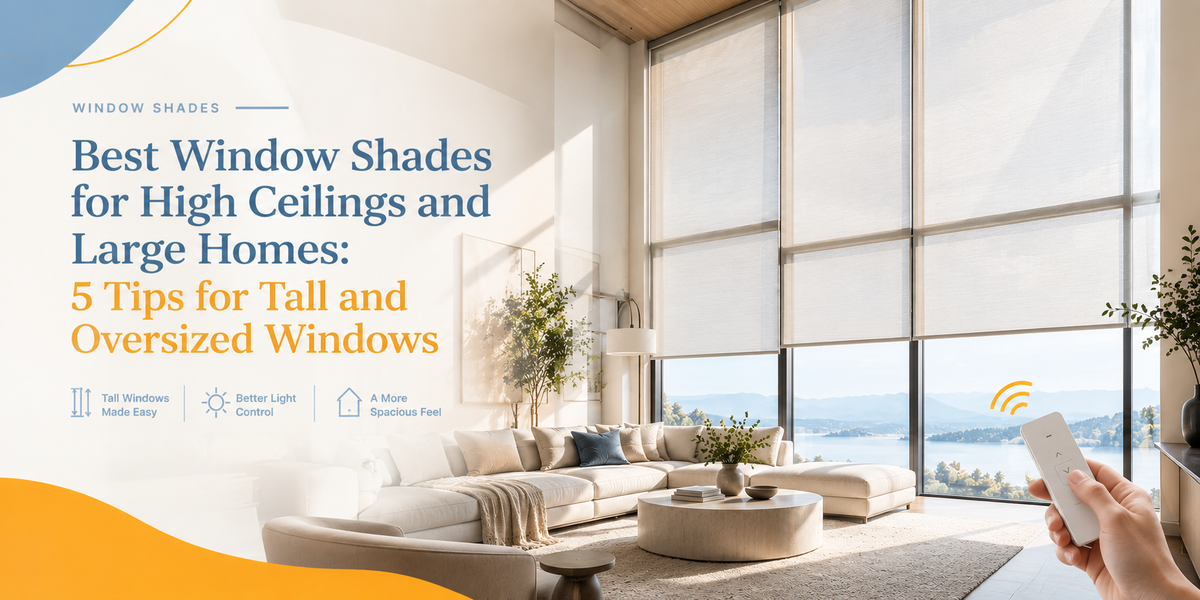

Leave a comment
All comments are moderated before being published.
This site is protected by hCaptcha and the hCaptcha Privacy Policy and Terms of Service apply.